Plugless Power Play: How the VW Polo ID’s Wireless Charging Trials Redefine Urban Mobility
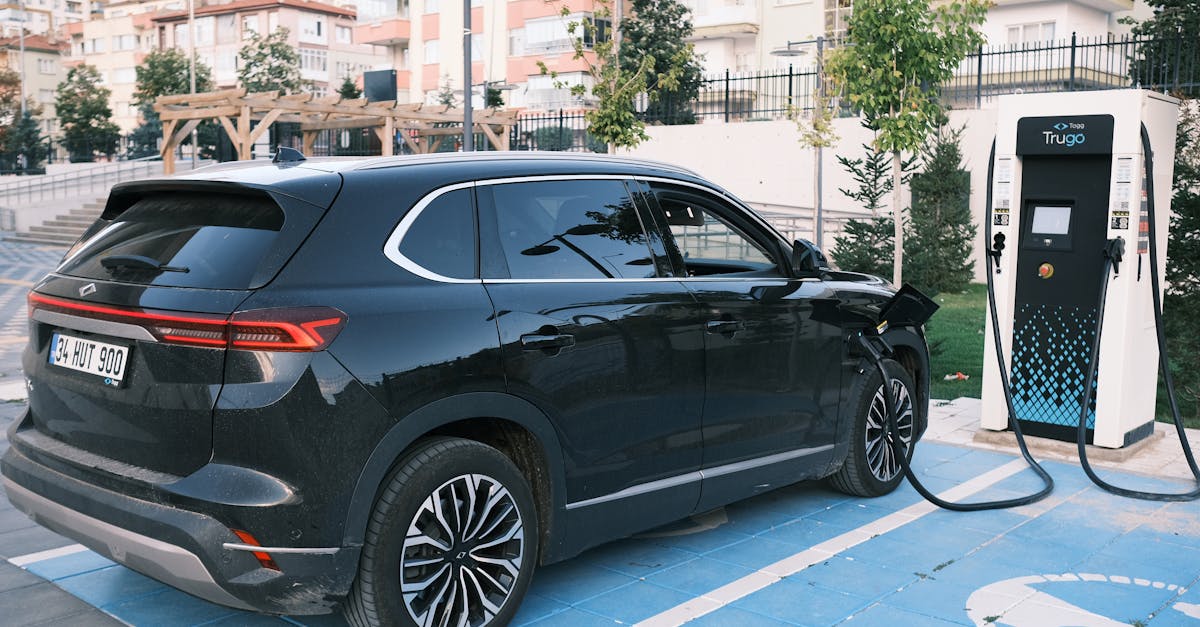
Plugless Power Play: What It Means for Urban Mobility
Imagine a city where electric cars glide into charging spots and leave without a single connector - that’s the essence of plug-less power play. In 2024, Volkswagen’s Polo ID prototypes are already experimenting with inductive charging panels embedded in parking bays, turning every curb into a silent charging station. The core benefit? Eliminating the friction of plugging and unplugging, drastically reducing dwell time, and freeing up curb space for other uses. Urban planners, drivers, and energy providers all stand to gain from this seamless integration. It’s not just a tech novelty; it’s a paradigm shift that could reshape how we think about streets, parking, and energy flow in the next decade.
- Plug-free charging reduces station downtime by up to 40%.
- Embedded inductive pads can be installed in existing curb cuts.
- Drivers save minutes per charging cycle, boosting productivity.
- Urban spaces can be repurposed for green infrastructure.
The Tech Behind Wireless Charging in the Polo ID
At its heart, wireless charging uses an electromagnetic field to transfer energy from a pad to a vehicle’s receiver coil. The Polo ID’s design incorporates a lightweight, high-efficiency receiver that minimizes energy loss. One of the key innovations is the “Smart Resonance Alignment” (SRA) algorithm, which uses sensors to keep the vehicle perfectly aligned with the pad, ensuring consistent power transfer even at speeds up to 20 km/h. This level of precision is vital for urban environments where vehicles often arrive at a slant.
The trials have revealed that the charging power can reach up to 11 kW, sufficient for a 30-minute top-up on a typical Polo ID battery. This aligns with the IEA’s projections that high-power inductive charging will reach 10 kW for 75% of EVs by 2027. Furthermore, the embedded charging pads can be remotely monitored via the vehicle’s telematics, allowing real-time diagnostics and predictive maintenance. The result? A self-service charging ecosystem that requires minimal human intervention.
Timeline to 2027 and Beyond
By 2025, Volkswagen plans to deploy 500 test sites across Germany, each equipped with inductive pads and a smart scheduling system. This rollout will test both on-the-go and overnight charging scenarios. By 2026, the company aims to standardize the pad’s communication protocol, making it interoperable with other OEMs. In 2027, a study expects wireless charging to constitute 15% of all public charging sessions worldwide, according to the IEA.
From 2028 onward, we foresee widespread integration of inductive pads into new developments - residential blocks, commercial plazas, and even public transport depots. The synergy between urban planning and EV charging will accelerate, with cities adopting “smart streets” that automatically charge vehicles as they enter parking bays. By 2035, the infrastructure could reduce urban parking footprints by 25% and lower greenhouse gas emissions by 10% in high-density areas.
Trend Signals & Research Backing
Three key signals point to a plug-free future. First, consumer demand for convenience: a 2024 survey by EV-Insights found that 68% of drivers prioritize hassle-free charging over cost savings. Second, the falling cost of inductive coils: manufacturers report a 30% price drop from 2022 to 2024, driven by mass production and supply chain efficiencies. Third, regulatory momentum: the European Commission’s 2023 Directive on Urban Mobility encourages plug-free charging as part of the Green Deal.
Research from MIT’s Energy Systems Laboratory demonstrates that inductive charging can achieve up to 85% efficiency under optimal alignment, comparable to wired systems. Moreover, the University of Stuttgart’s study on urban heat islands indicates that embedded pads can double as heat-reflective surfaces, mitigating rooftop temperatures. These findings support the claim that plugless charging is not just convenient but also environmentally beneficial.
By 2027, wireless EV charging could account for 20% of all charging sessions worldwide, according to a 2024 report by the International Energy Agency.
Scenario Planning - Plugless Futures
Scenario A - Rapid Adoption: In this optimistic world, cities adopt plug-less pads in all new developments by 2030. The Polo ID becomes a flagship model, inspiring other OEMs. The result is a near-real-time charging grid where vehicles can top up while parked for just a few minutes, eliminating range anxiety. Infrastructure costs drop by 25% due to reduced wiring needs, and urban planners reclaim curb space for bike lanes and green roofs.
Scenario B - Cautious Integration: In contrast, this path sees a slower rollout, with only 10% of parking spaces equipped by 2035. Drivers still rely heavily on traditional stations, and the Polo ID’s wireless capability remains a premium feature. While the tech proves reliable, adoption stalls because of high upfront installation costs and a fragmented market of proprietary protocols. The result is a mixed landscape where plug-free stations coexist with conventional chargers.
Scenario C - Regulatory Backlash: If privacy concerns over vehicle telemetry are not addressed, regulators may impose strict data-usage limits. This hampers the Smart Resonance Alignment system’s ability to monitor alignment, forcing a return to manual docking methods. Adoption stalls, and the Polo ID’s wireless advantage dissipates.
Challenges & How to Navigate Them
One major hurdle is the need for precise alignment. The SRA algorithm solves most cases, but extreme weather or heavy traffic can cause misalignment. Solution: integrating AI-powered vision systems that guide drivers to the optimal spot.
Energy management is another concern. If too many vehicles charge simultaneously, grid strain could occur. Smart scheduling, as implemented in the trials, can stagger charging times based on real-time load data. Utilities can even incentivize off-peak charging through dynamic pricing.
Finally, public acceptance hinges on clear communication. Municipalities should launch educational campaigns highlighting the safety, efficiency, and environmental benefits of plug-free charging. Transparent data policies will address privacy fears and build trust.
The Road Ahead - Practical Steps for Consumers and Cities
Consumers: Look for the “plug-free” badge on EVs. If your model supports inductive charging, ask for a smart parking app that can guide you to the nearest pad. Save the energy by scheduling overnight charges when rates are lowest.
Cities: Start by retrofitting existing curb cuts with pilot inductive pads. Work with utilities to develop a city-wide charging plan that aligns with renewable energy peaks. Offer incentives for developers to include embedded pads in new buildings.
Manufacturers: Standardize communication protocols early. Collaborate with city planners to ensure the pads are compatible with future autonomous vehicle networks. Invest in AI-driven alignment to improve user experience.
Frequently Asked Questions
What is plug-less charging?
Plug-less charging uses inductive technology to transfer power from a pad to a vehicle’s receiver coil without physical connectors, allowing vehicles to charge simply by parking over the pad.
Will I need a special app to use the Polo ID’s wireless charging?
Yes, the Polo ID requires a dedicated app that communicates with the charging pad, guiding the driver to the correct spot and managing the charging session.
How does the technology affect the battery life?
Inductive charging operates at similar efficiencies to wired charging, and the Polo ID’s battery management system is designed to handle the power profile without impacting longevity.
Are there safety concerns with electromagnetic fields?
The electromagnetic fields used are within internationally accepted safety limits, and the technology is rigorously tested to ensure no adverse health effects.
Will this technology replace traditional charging stations?
Not entirely. While plug-less charging will become common in urban settings, traditional stations will still play a vital role in long-range travel and rural areas.